First Detection of Sound from a Black Hole Kick
#black_hole #sound #detection #astrophysics
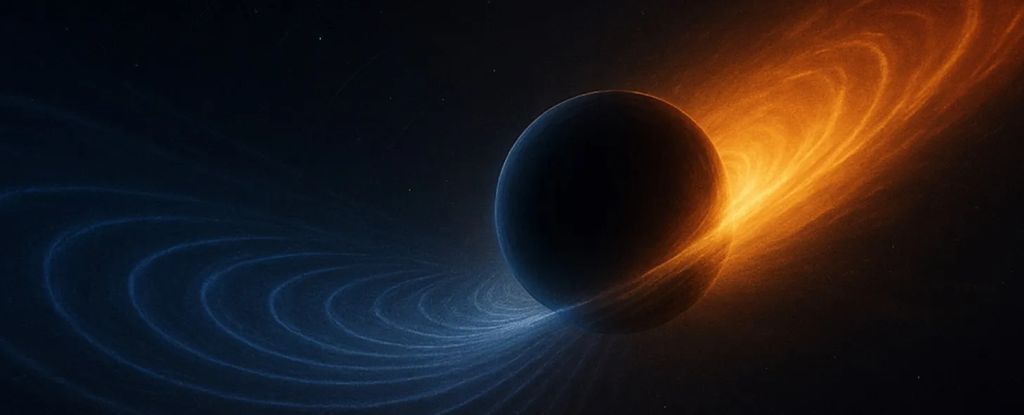
Scientists have discovered and measured the sound of a black hole kick for the first time, providing valuable insights into these extreme cosmic events.
## Overview The **Laser Interferometer Gravitational-Wave Observatory (LIGO)** is a pioneering scientific organization dedicated to detecting cosmic gravitational waves—ripples in spacetime predicted by Einstein’s theory of general relativity[1]. Unlike traditional astronomy, which relies on electromagnetic radiation (light, radio waves, X-rays), LIGO provides a radically new way to observe the universe by measuring minuscule distortions caused by gravitational waves[1][6]. ## What LIGO Does LIGO operates using two large interferometers—one in Hanford, Washington, and another in Livingston, Louisiana—each with arms 4 kilometers long[1][5]. A laser beam is split, sent down each arm, reflected by mirrors, and then recombined. Gravitational waves passing through Earth slightly alter the length of these arms, producing a detectable interference pattern[5]. This setup is extraordinarily sensitive, capable of measuring changes less than one ten-thousandth the diameter of a proton[1]. The observatory’s primary targets are cataclysmic cosmic events, such as black hole and neutron star mergers[2]. ## History and Development LIGO was conceived in the 1980s by physicists Rainer Weiss, Kip Thorne, and Ronald Drever[6]. Funded by the U.S. National Science Foundation (NSF) and built by Caltech and MIT, the first detectors began operating in 2002[1][9]. Initial runs did not detect gravitational waves, prompting a major upgrade to “Advanced LIGO,” which dramatically improved sensitivity[1][8]. The enhanced detectors went online in 2015[1][8]. ## Key Achievements LIGO’s most celebrated achievement came on September 14, 2015, with the first direct detection of gravitational waves, labeled GW150914[5][6]. This event, caused by the merger of two black holes about 1.3 billion light-years
#black_hole #sound #detection #astrophysics
Scientists have discovered and measured the sound of a black hole kick for the first time, providing valuable insights into these extreme cosmic events.